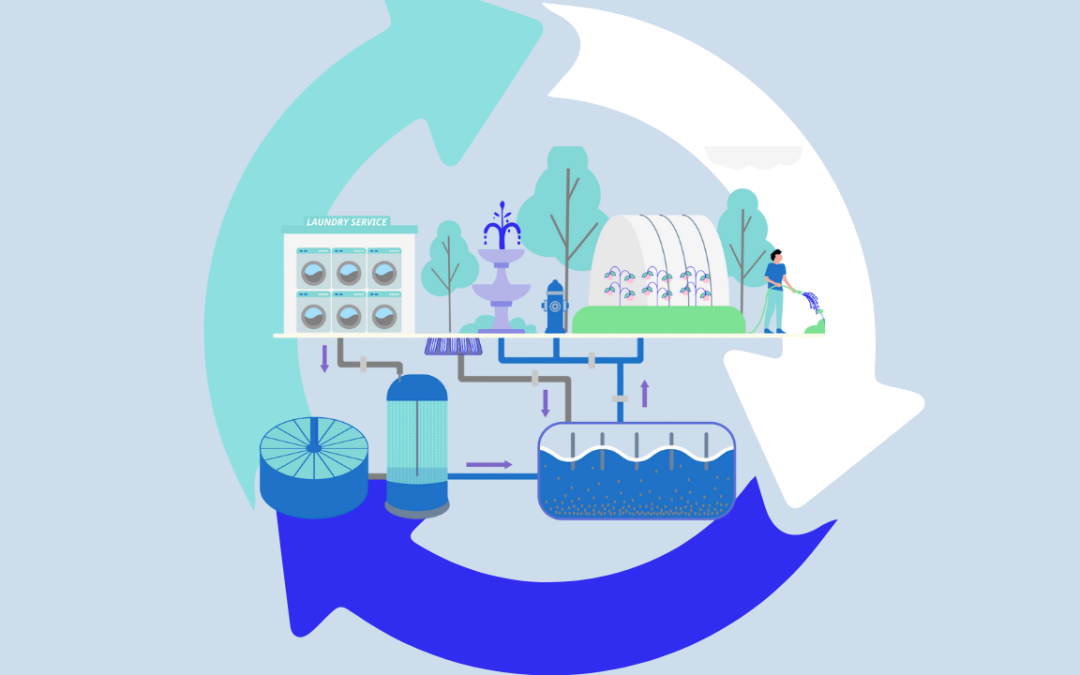
Freshwater is one of our most vital resources, yet much of it is lost after a single use. With growing populations, urbanization, and climate pressures threatening water availability, it has become imperative to rethink how we manage and consume water. Water circularity offers a practical, forward-looking approach: systems that treat and reuse water, allowing it to flow through homes, businesses, and cities multiple times rather than being discarded.
Circular water systems transform how we perceive water—not as waste, but as a valuable resource. By reusing water from showers, sinks, rainfall, or urban runoff, communities can relieve pressure on natural sources, reduce operating costs, and build resilience against climate-related disruptions. From small-scale domestic interventions to city-wide infrastructure, circularity demonstrates that even incremental changes can collectively have a profound impact.
Circular Solutions at Home
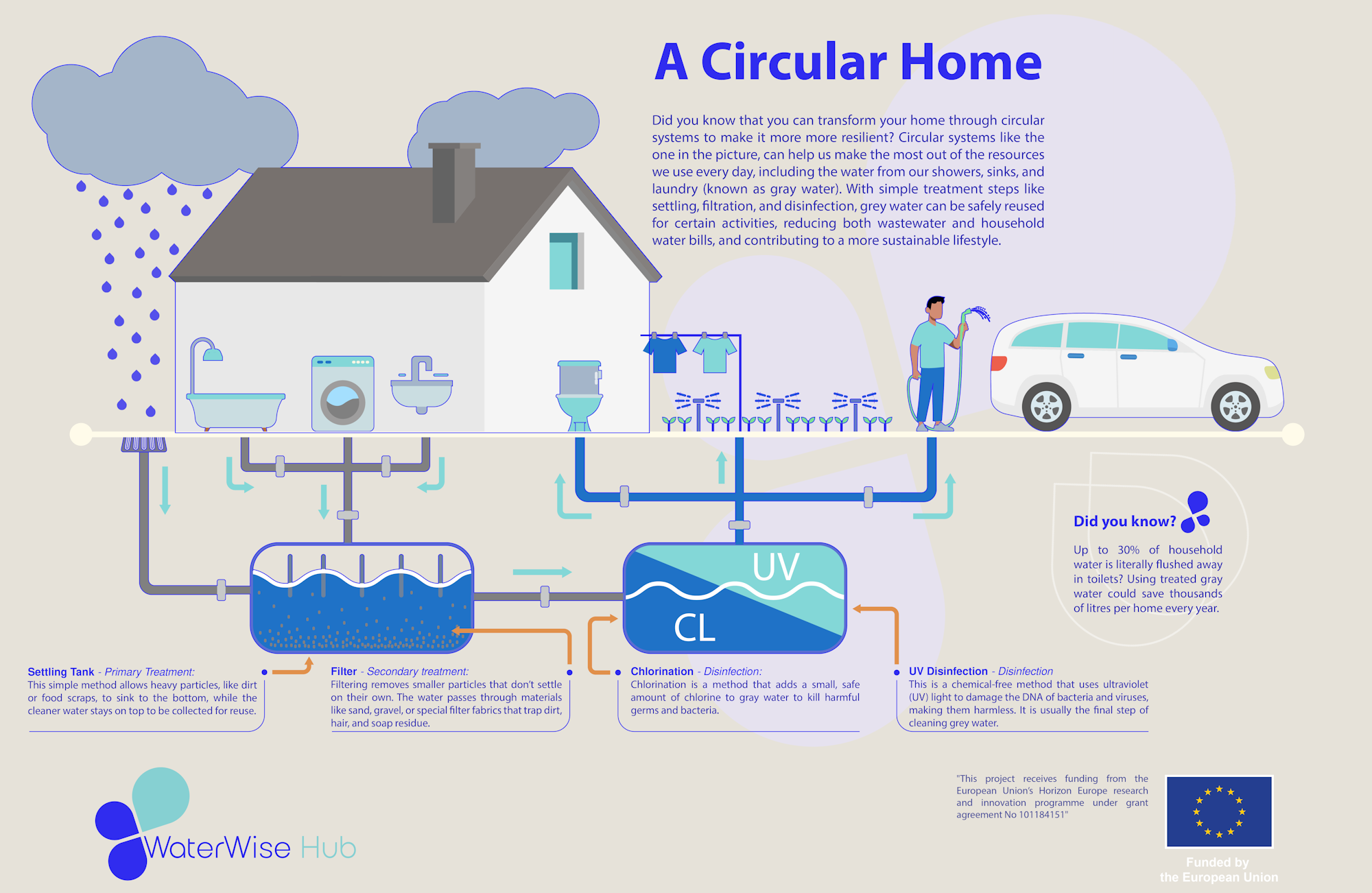
In households, as much as 30% of water is used once and flushed away. Circular systems make it possible to reclaim this water, particularly gray water from showers, sinks, and laundry, and treat it for reuse in toilets, irrigation, or cleaning. Treatment involves a combination of simple and effective steps—settling, filtration, and disinfection—to ensure safety and usability.
Key purification methods include:
- Settling Tanks – Primary Treatment: Heavy particles sink, leaving clearer water at the surface.
- Filters – Secondary Treatment: Sand, gravel, or specialized fabrics remove smaller particulates.
- Chlorination: Adds a controlled amount of chlorine to eliminate pathogens.
- UV Disinfection: A chemical-free approach using ultraviolet light to neutralize bacteria and viruses.
By adopting these approaches, households not only save thousands of litres of water annually but also reduce their environmental footprint and contribute to broader sustainability goals.
Scaling Circularity in Urban Environments
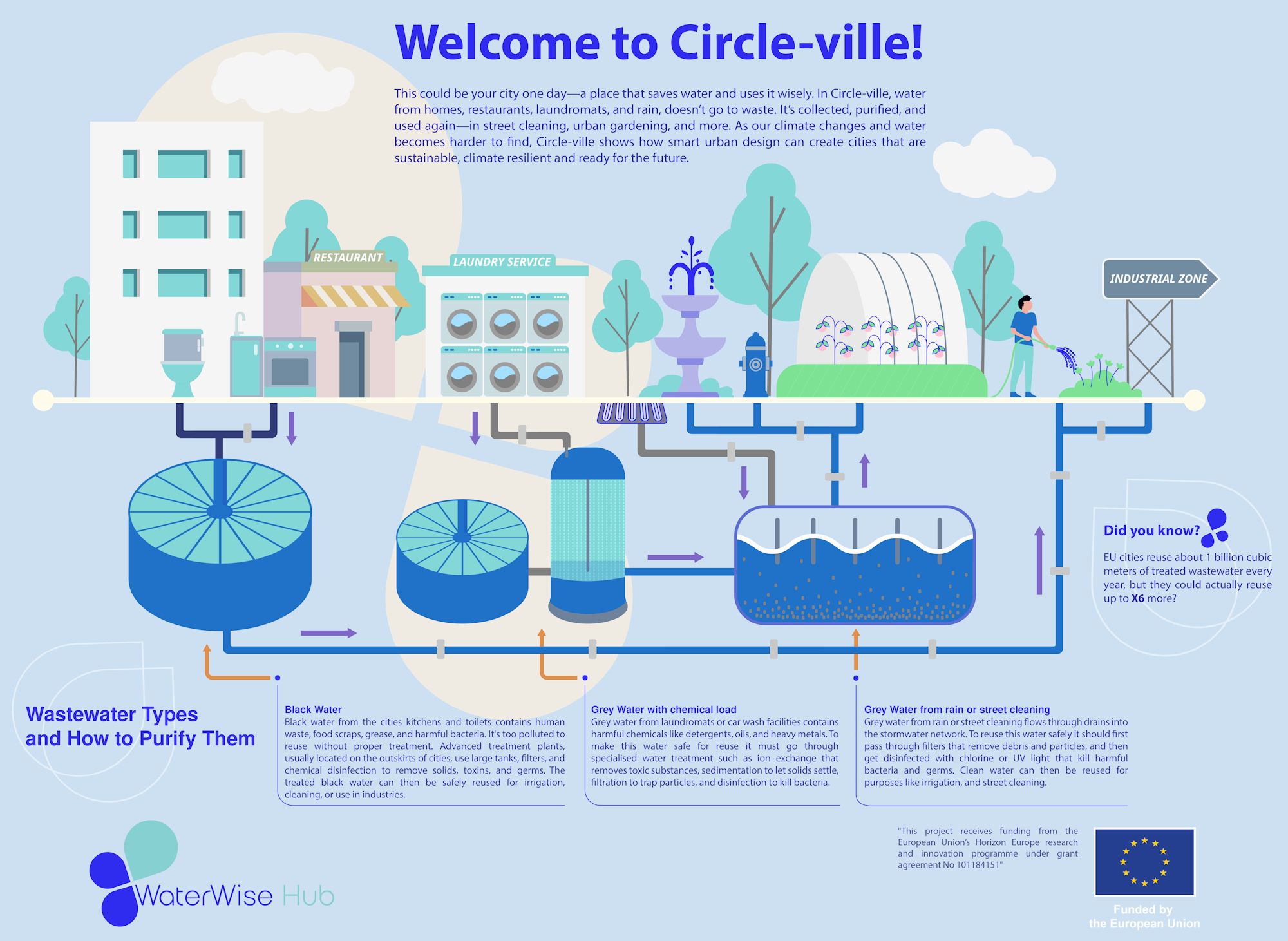
At the municipal level, circular water management can fundamentally reshape cities. Consider Circle-ville: a city where water from households, commercial activities, and rainfall is collected, treated, and redirected for uses such as urban irrigation, street cleaning, or industrial processes.
Black water—from toilets and kitchens—undergoes advanced treatment to remove contaminants, making it safe for reuse. Gray water from laundromats or car wash facilities, often containing chemicals and heavy metals, is treated with specialized methods including ion exchange, sedimentation, filtration, and disinfection. Even runoff from streets and rainwater can be captured, filtered, and disinfected for safe secondary use.
EU cities currently reuse approximately 1 billion cubic meters of wastewater annually, yet estimates suggest potential reuse could be up to six times higher, underscoring the untapped opportunity for circular water systems.
Advancing Technology and Shaping Perceptions
At the Waterwise Hub, we focus on advancing and championing for the technologies that make water circularity viable, while illustrating their practical importance for modern urban life. Beyond the technical solutions, we aim to shift mindsets: showing that water reuse is not just feasible, but essential for sustainable living in a warming, resource-constrained world.
Through research, pilot projects, and stakeholder engagement, the WaterWise Hub seeks to empower households, municipalities, local businesses, industries and producers in rural areas to explore the benefits of circular water practices, and adopt them. By redefining how we value and use water, these systems help build more resilient, efficient, and sustainable communities.
