

Article by the Fundația Comunitară București (Bucharest Community Foundation)
In recent years, the Dâmbovița River has begun making its way back into Bucharest’s everyday life. This shift is the result of a coordinated series of interventions carried out under Dâmbovița Apă Dulce, a program led by Nod Makerspace and the Ivan Patzaichin – Mila 23 Association.
What began as a small initiative near Timpuri Noi neighbourhood has evolved into a growing network of river docks, community activities, cultural events, and urban experiments stretching across multiple parts of the city.
Today, Dâmbovița Apă Dulce stands as one of Bucharest’s most comprehensive urban transformation efforts – an attempt to restore the green-blue axis the city has overlooked for decades.
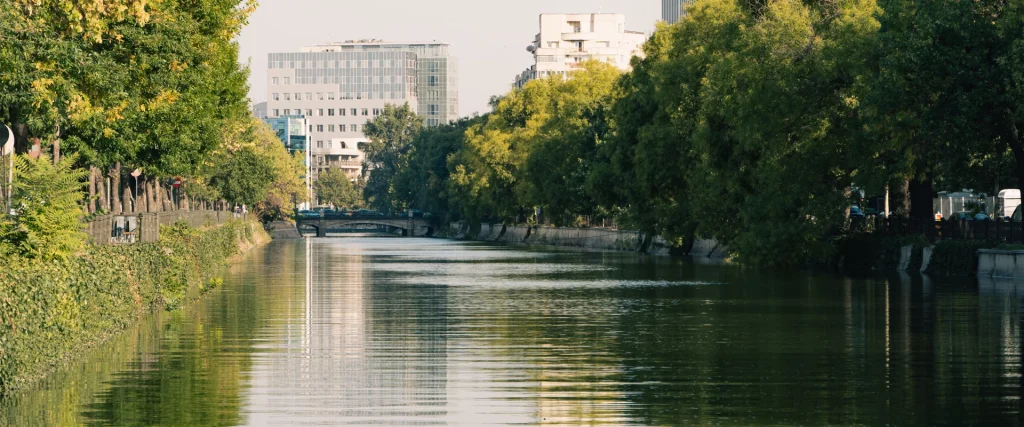
Dâmbovița Apă Dulce is more than a cultural or urban intervention. It is an applied example of how community engagement, temporary infrastructure, and interdisciplinary design can support long-term water management goals in a large European capital. The initiative is built around several long-term goals:
- restoring public access to the water through safe, functional infrastructure
- building public awareness and stewardship around urban water,
- improving connectivity between neighborhoods and riverbanks
- fostering cultural and community life on the waterfront
- testing ecological and mobility solutions at a small scale,
- enhancing environmental quality through green and sustainable interventions
- reimagining the river as a space for recreation, mobility, civic dialogue, and creative experimentation
To advance these goals, the teams at Nod Makerspace and Mila 23 operate on two fronts:
on-the-ground projects and strategic development, including design competitions and partnerships with urban specialists, while working closely with various public authorities.
The program’s interventions form a growing network of access points and public spaces, each playing a distinct role in reconnecting residents with the river. From Abatorului Dock to Timpuri Noi, Națiunile Unite, and Opera docks, these small-scale infrastructures combine safe river access, green spaces, and cultural programming with water-focused innovations like public drinking fountains and waste collection prototypes. Together, they show how thoughtful urban design can enhance water stewardship, promote circular water use, and engage communities in rethinking their relationship with the river—key principles that resonate with the WaterWise Hub’s mission.
Circular Water at Dâmbovița
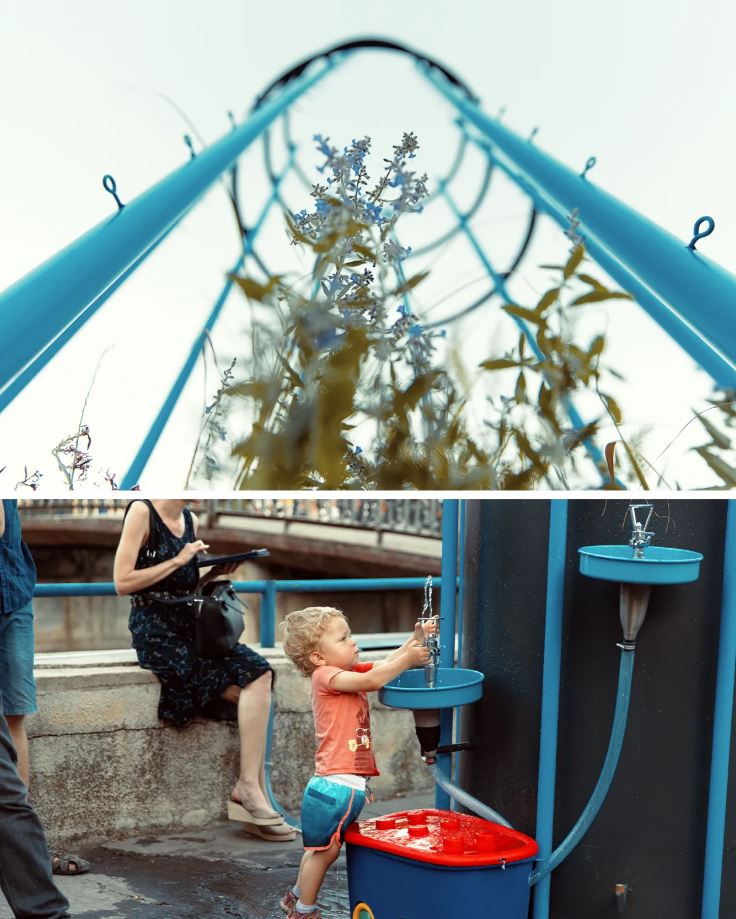
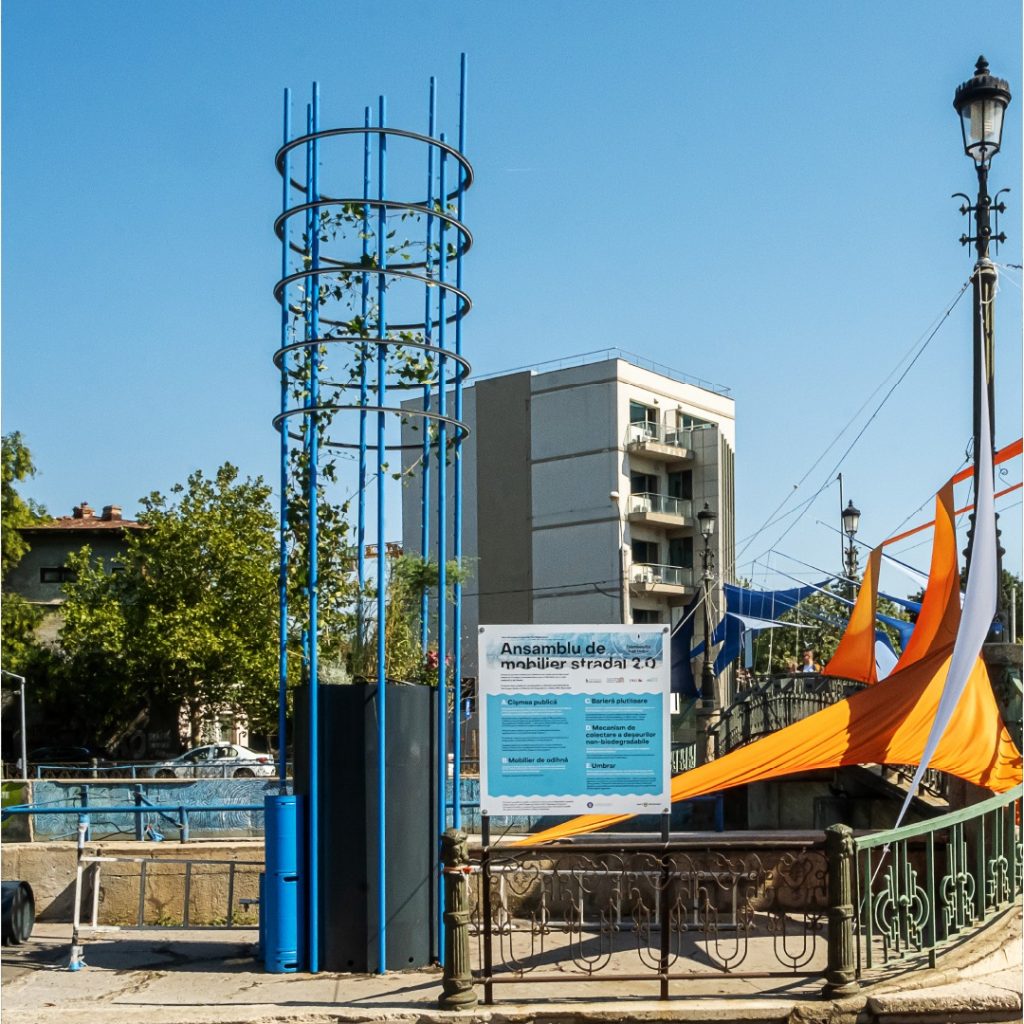
In the area of the Abatorului dock, the project initiators installed a public drinking fountain that filters water from the Dâmbovița River, transforming it into potable water available to passersby. The fountain is part of a street furniture ensemble that also includes an information point, a resting area, and a prototype mechanism for collecting non-biodegradable waste from the water—an innovative solution that can be replicated wherever cleaner rivers are desired.
With a filtration fineness of 0.001 microns and a high treatment capacity—ideal for waters with very high bacteriological loads and diverse pollutants—the ultrafiltration station provides safe drinking water by eliminating bacteria and impurities, while preserving the minerals beneficial to the human body. The initiative to extract drinking water from the Dâmbovița through a visible, transparent process helps raise community awareness about the value of the city’s river, the importance of keeping it clean, and the circular use of water.
An international competition to reimagine six riverfront sites
To move beyond individual interventions and toward a cohesive long-term vision, the program – with support from The Romanian Order of Architects (OAR Bucharest) – launched an international design competition for six strategic sites along the river. The competition seeks proposals that enhance public access to water, reconnect pedestrian routes along the riverbanks, integrate cultural and recreational spaces, and introduce ecological and water-sensitive solutions for microclimate and habitat improvement. It also encourages innovative water mobility and light-navigation concepts and models for seasonal or permanent programming that engage communities with the river. This represents a key step in Dâmbovița Apă Dulce’s evolution—from isolated interventions to a coordinated, water-conscious urban vision taking a step closer to sustainable, circular, and community-centered water management.
A city learning to see its river again
In just a few years, the Dâmbovița has re-emerged as a place of social encounters, creativity, curiosity, and civic energy. The network of four docks, the Dâmbovița Delivery events, cultural activations, and the international design competition together signal a new path forward for the city’s river.
For the last two years, Fundația Comunitară București (Bucharest Community Foundation) has been the main donor of the program, through Platforma de mediu pentru București (Bucharest Environment Platform).
